
How we helped a recruitment consultant land a $50,000 retainer client and his biggest quarter on record
Mark Wojcik had a recruiting consultancy full of genuine expertise and a pipeline that didn't match it. We built him a repeatable client acquisition system, and within a quarter he had closed a $50,000 retainer program, grown to three large retainer clients, and posted the best revenue quarter in his company's history.
$50,000
New Retainer Client
$30K/mo
Record Month
Industry: Talent Acquisition Consulting
Country: United States
Audience: Industrial & Professional Services
Company Size: 50-5,000+
About East Park Avenue
East Park Avenue is a Charlotte-based talent acquisition consultancy founded by Mark Wojcik in 2020 on a single promise: hiring should not feel like guesswork. Rather than operating as another agency that charges a fee per placement, Mark positions himself as a fractional talent acquisition leader who installs repeatable recruiting systems inside a company and then trains the existing team to run them. The flagship offerings, Recruiter PRO Training, the Total Talent Review, and ongoing recruitment performance management, are all built on his own Talent Acquisition Playbook methodology. The numbers he points to are concrete: more than 200 professionals trained worldwide, over $1.5 million in recruiting expenses removed from client budgets, and an average reduction of 26.5 days in time-to-hire.
Mark's background gives the work its credibility. He spent years as an executive recruiter at Talentbridge across HR, accounting, and finance desks before going independent, and he is the author of Recruiter PRO Training. His clients range from global manufacturers like Greenheck Group to growing mid-market employers, and the through-line never changes: take a hiring function that feels chaotic and expensive, audit it end to end, and leave behind a process the in-house team can run with confidence long after the engagement is over. It is genuinely good consulting. What it lacked, when we first met Mark, was a client acquisition engine as disciplined as the hiring systems he builds for everyone else.

Client Challenges
The first problem was positioning, not capability. Mark could do almost anything inside the talent function, audits, training, process design, performance management, even hands-on recruiting, and that breadth was quietly working against him. Prospects heard "we can do a little of everything" and struggled to connect him to a specific, urgent, buy-now problem. In his own words, he had spent years actively distancing himself from headhunting because he saw the business as process improvement and training, and that reflex was costing him deals he never even realized he was turning away.
The second problem was pipeline consistency. Like most expert-led consultancies, East Park Avenue's growth leaned heavily on referrals, past relationships, and the occasional inbound enquiry. That produces a feast-or-famine revenue line: stretches of great work followed by quiet months with an empty calendar. There was no predictable, repeatable motion bringing qualified conversations to the top of the funnel week after week, which made every quarter a fresh gamble and capped how confidently Mark could grow the business.
The third problem was that Mark's outreach, when it happened, did not reflect how sharp his actual offer was. The messaging tried to capture the full range of what he could do, and in doing so diluted all of it. Decision-makers in HR and on executive teams are busy; a message that gestures vaguely at "talent strategy" gets ignored, while a message that names a specific, expensive pain (bad hires, runaway agency fees, a role that has sat open for months) earns a reply. Mark needed his outbound to lead with one clear promise, aimed at the right people, sent consistently enough to compound.
Our Solutions
We built East Park Avenue a repeatable client acquisition system designed around one idea: make the offer impossible to misunderstand, then put it in front of the right buyers, consistently.
1. Sharpened the offer
We helped Mark collapse a broad "we do everything in talent" message into a focused, named offer built on his strongest assets: Recruiter Training, one-on-one coaching, and recruitment performance management. Instead of deflecting the high-value recruiting conversations he used to avoid, the new positioning leaned straight into the most expensive problems his buyers actually have, so a prospect could instantly understand what he sells and why it is worth $50,000.
2. Built the outbound engine
We constructed a targeted outreach system aimed squarely at the HR leaders, hiring executives, and growing employers most likely to feel the cost of bad hires and bloated agency spend. The messaging led with one concrete promise rather than a menu, and the whole motion was built to run as a predictable weekly cadence instead of a sporadic burst, so qualified conversations began arriving on a schedule.
3. Installed cadence and accountability
A great system only works if it actually runs. We wrapped the outreach in a clear cadence and accountability structure so the daily and weekly actions happened week in and week out, even during Mark's busiest delivery periods. That consistency is what turned a promising approach into a compounding pipeline.
Project Results
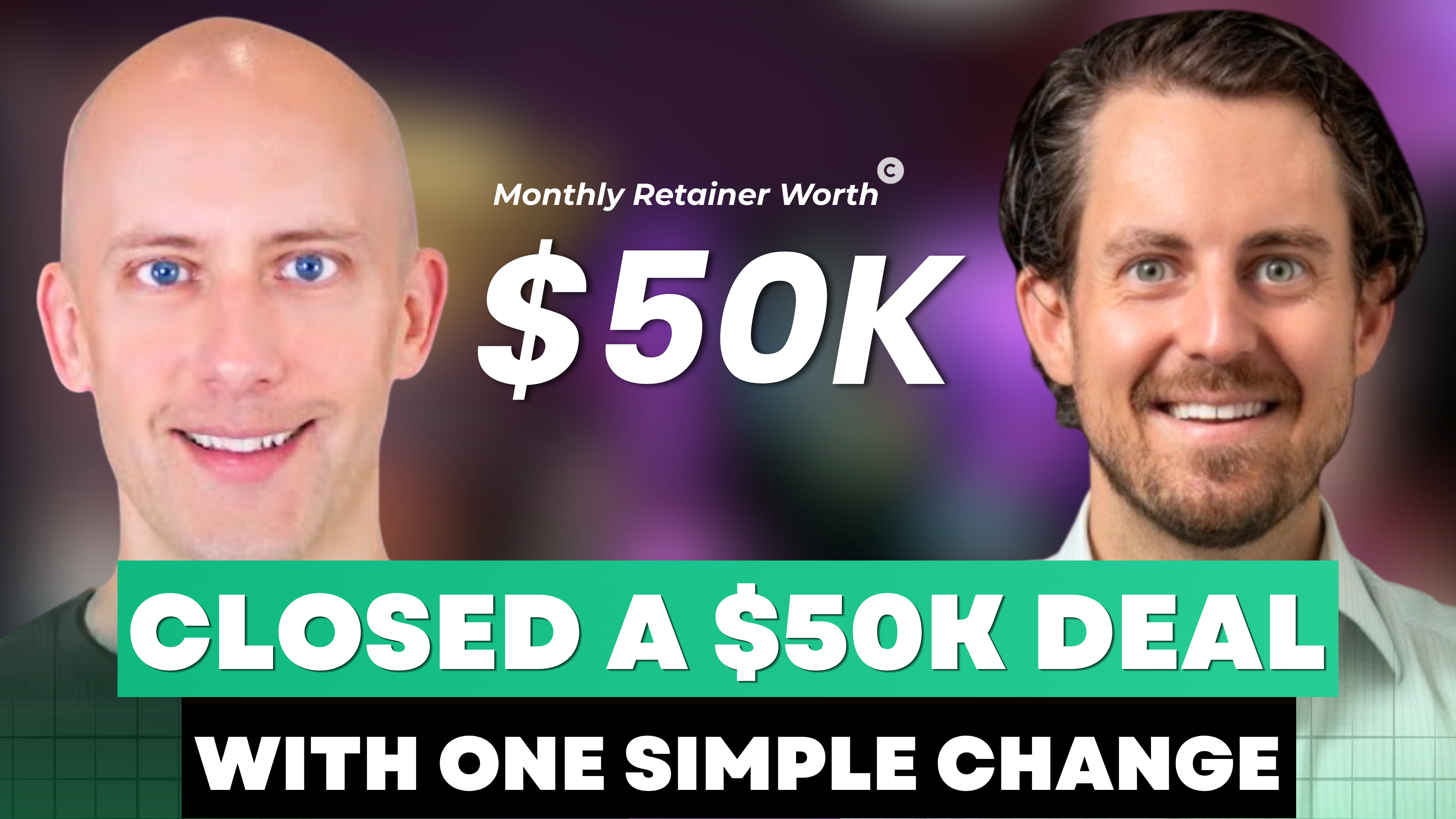
The shift showed up in the numbers fast. With a focused offer and a consistent outbound motion behind it, Mark closed a client he had been chasing since 2023: a $50,000 program running over six months on a monthly retainer, with East Park Avenue redesigning the client's entire hiring methodology and rebuilding how that company grows from here. He hit a $30,000 revenue month, the biggest in his company's history, grew to three large retainer clients at once, and booked the strongest quarter East Park Avenue had ever recorded. As Mark put it the moment the big deal landed, "Business is booming. I'm set to have a $30K month, biggest month yet." Same expertise, same founder. The only thing that changed was a system that finally fed it.
“So now here we are, a $50,000 program over the next six months on a monthly retainer. I’m redesigning the client’s entire hiring methodology and revamping how their whole company will grow from here.”

ALPHA
LEAD PARTNERS
Your outbound motion. Full TAM coverage for serious B2B companies, every 30 days.
Explore
Testimonials & Case Studies© 2026 Alpha Lead Partners. All rights reserved.
Vienna, Austria